
What Is a Dental Bridge?
A fixed replacement for missing teeth.
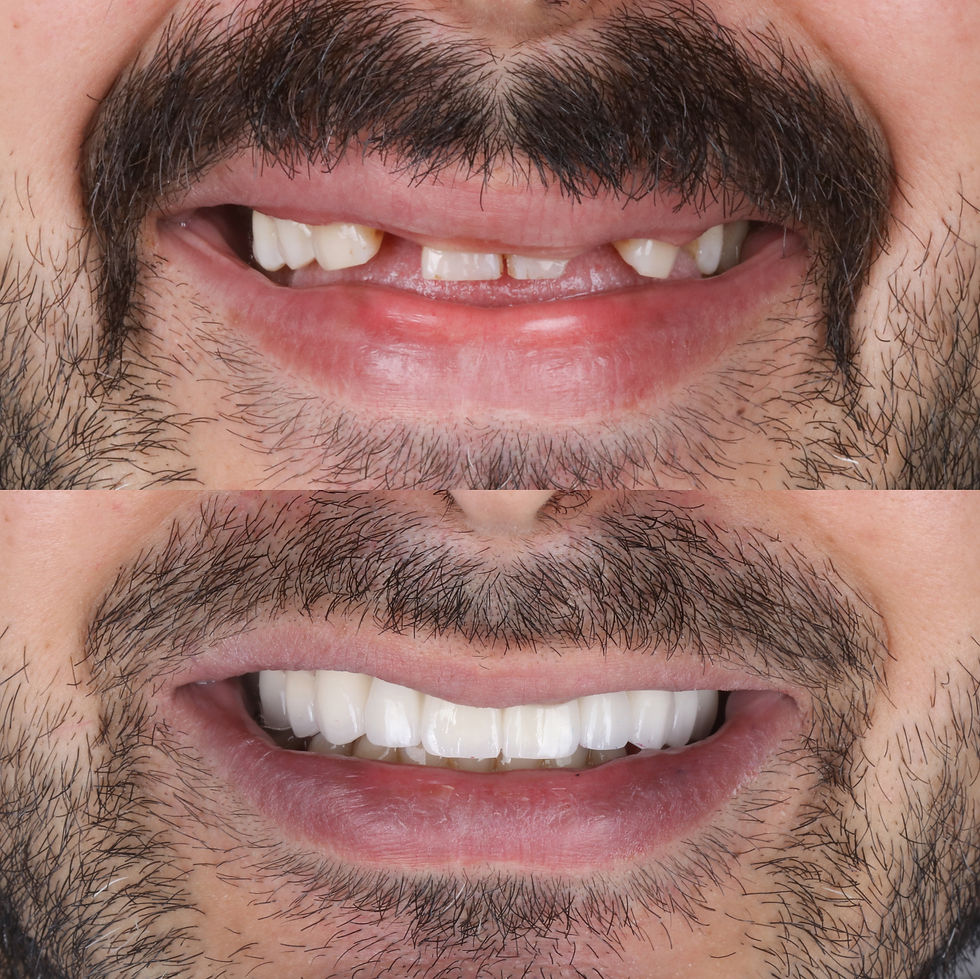
A dental bridge consists of one or more artificial teeth (called pontics) held in place by crowns on the natural teeth on either side of the gap. It’s called a bridge because it literally bridges the space left by a missing tooth.
Unlike dentures, a bridge is permanently cemented in place — you care for it just like your natural teeth. It restores your ability to chew and speak normally, prevents neighboring teeth from shifting into the gap, and maintains the natural shape of your face.
A bridge may be the right option if:
-
You’re missing one to three adjacent teeth
-
The teeth on either side of the gap are healthy and strong enough to support a crown
-
You want a fixed, non-removable solution
-
An implant isn’t the right fit for your situation

The Process
Typically two visits.
1
Preparation
The teeth on either side of the gap are shaped to accommodate the crowns that will anchor the bridge. Impressions or digital scans are taken, and a temporary bridge is placed to protect the area while your permanent one is made at the dental lab.
2
Placement
Your custom bridge is tried in, adjusted for fit and bite, and permanently cemented. We check everything before you leave. Most patients walk out feeling like the gap was never there.

Common Questions
What patients ask about bridges.
Both are good options, and the right choice depends on your bone density, the condition of neighboring teeth, budget, and timeline. Implants are generally the more durable long-term solution and don’t require altering healthy teeth. Bridges are faster to complete and sometimes more cost-effective. We’ll walk through the pros and cons of both at your consultation.
With good oral hygiene and regular cleanings, a dental bridge typically lasts 10–15 years or longer. Flossing under the bridge with a floss threader or water flosser is important for keeping the gum tissue underneath healthy.
Most PPO plans cover bridges as a major restorative service, typically at 50% after your deductible. We verify your benefits before treatment so you know exactly what to expect.
Yes — we use porcelain matched to the color of your surrounding teeth. The goal is a result that’s indistinguishable from your natural smile.
You might also be interested in
Restorative
Dental Implants
A permanent alternative that doesn’t rely on neighboring teeth.
Restorative
Dental Crowns
The anchors on either side of your bridge.
Restorative
Dentures & Snap-On Dentures
Options for replacing multiple missing teeth.