

What Is Tooth Bonding?
The most conservative cosmetic fix we offer.
Dental bonding uses the same tooth-colored composite resin as our fillings — sculpted directly onto your tooth to correct its shape, color, or size. Unlike veneers, bonding doesn’t require removing any enamel, making it completely reversible.
It’s one of our most underrated services: fast, affordable, and surprisingly effective for the right situation. Many patients walk in with a chip that’s bothered them for years and walk out in under an hour with a tooth that looks completely natural.
Bonding works well for:
-
Chipped or cracked teeth
-
Small gaps between teeth
-
Teeth that are slightly shorter than the ones around them
-
Minor discoloration that doesn’t respond to whitening
-
Slightly misshapen teeth
-
Exposed root surfaces that have become sensitive

What to Expect
Usually done in one visit.
Bonding is one of the simplest procedures we do. In most cases, no anesthesia is needed (unless we’re also treating decay). Here’s how it goes:
-
The tooth surface is lightly etched to help the resin adhere
-
A conditioning liquid is applied, then the composite resin is placed and shaped
-
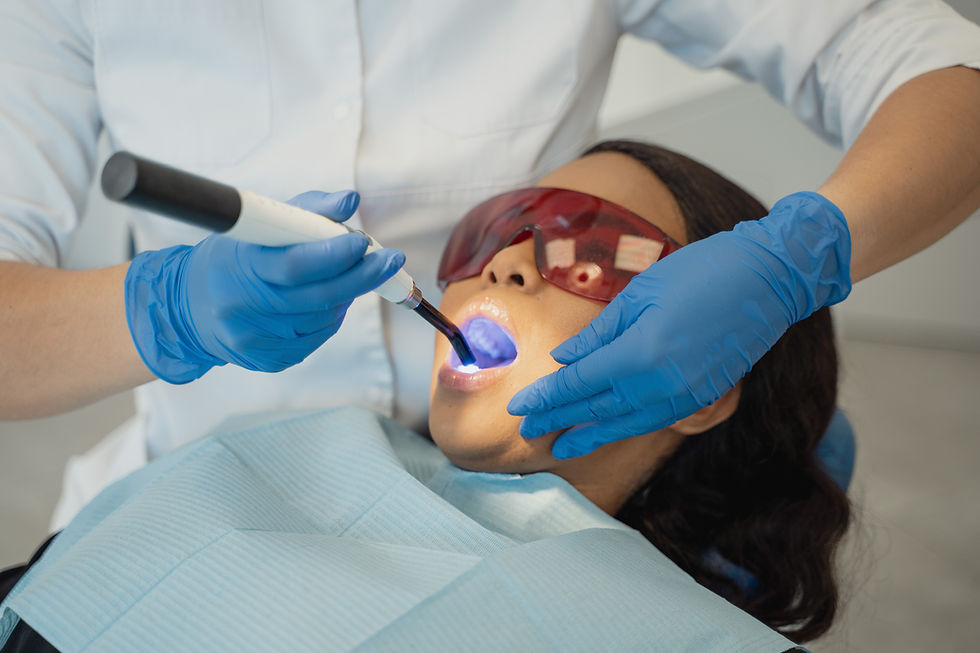
A curing light hardens the material in seconds
-
We polish and fine-tune the shape until it looks and feels exactly right
Most bonding appointments take 30–60 minutes per tooth. There’s no downtime, and you leave with an immediate result.
Bonding vs. veneers: Bonding is more affordable and requires no enamel removal, but it’s less durable and more prone to staining over time. For minor fixes, bonding is often the smarter choice. For more extensive cosmetic work, veneers may be worth the investment. We’ll help you decide.
Common Questions
What patients ask about bonding.
Typically 5–10 years with good care. Bonding is less durable than porcelain, so it can chip under pressure. Avoiding habits like biting nails, chewing ice, or opening packages with your teeth helps it last longer.
Composite resin can stain over time, especially with coffee, tea, and red wine. Whitening treatments won’t change the color of the bonding material, so it’s worth whitening your natural teeth first if that’s something you want to do.
In most cases, no anesthesia is needed and there’s no discomfort. If the bonding is being used to repair a chipped tooth near the nerve, some sensitivity is possible but typically short-lived.
It depends on the reason. Bonding used to repair a chipped tooth or protect an exposed root is sometimes covered as a restorative procedure. Purely cosmetic bonding typically isn’t. We’ll check your benefits and let you know before we start.
You might also be interested in
Cosmetic
Teeth Whitening
Whiten your natural teeth before or alongside bonding.
Cosmetic
Dental Veneers
A longer-lasting option for more extensive cosmetic improvements.
Restorative
Dental Fillings
Repair decay while restoring the look of your tooth.